The Patient Experience Revolution: How AI Receptionists Deliver Human-Level Empathy at Scale
http://Patient experience is no longer a “nice-to-have” in healthcare. Today, it’s the deciding factor between a clinic that thrives and a clinic that slowly loses patients to competitors. Patients expect to feel heard, cared for, and respected from the moment they call. When clinics fail to provide that experience, trust disappears — and so do bookings.
AI receptionists are transforming patient experience by delivering consistency, empathy, and instant support at scale.
They are not replacing human care. Instead, they amplify it.
Why Patient Experience Is the New Battleground
Modern patients behave like modern consumers. They compare clinics, read reviews, and expect customer service that matches the quality of the medical care they receive.
According to international healthcare research:
- 76% of patients judge a clinic by its first phone interaction.
- 60% will switch clinics if they feel ignored or disrespected.
- 70% expect immediate answers, not voicemails.
As a result, the front-desk experience shapes the entire reputation of a clinic.
When calls go unanswered, placed on long holds, or handled with frustration, patients lose trust instantly.
The Empathy Gap in Traditional Front-Desk Workflows
Human receptionists care deeply, but they face limitations:
- They cannot answer two calls at once.
- They get tired, stressed, or overwhelmed.
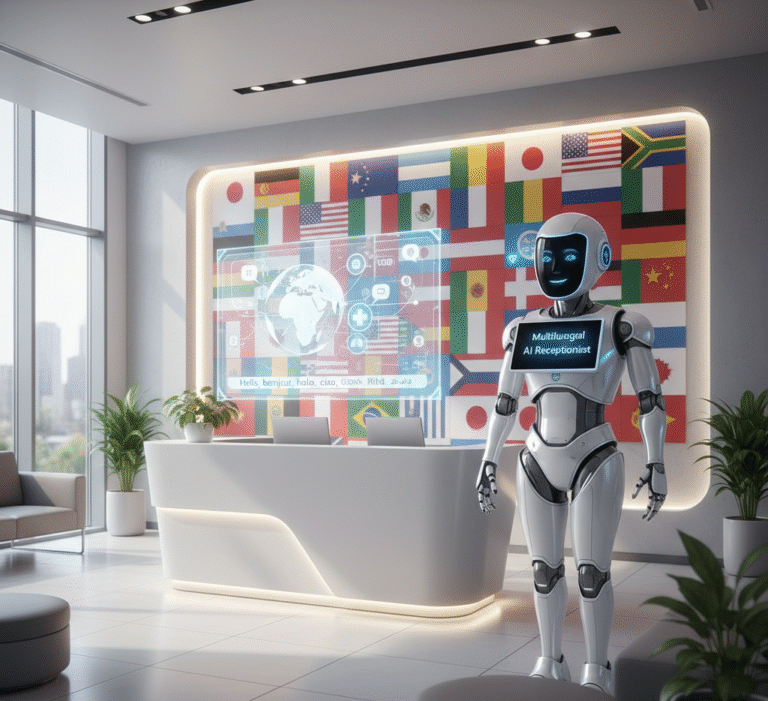
- They may struggle to communicate in multiple languages.
- Their tone depends on the clinic’s workload.
No matter how skilled the staff is, human limitations create inconsistent patient experiences.
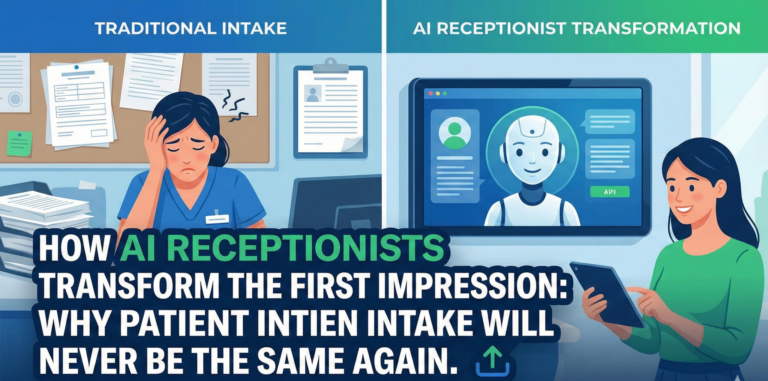
AI receptionists eliminate these limitations — while keeping the human touch intact.
How AI Receptionists Deliver Human-Like Empathy
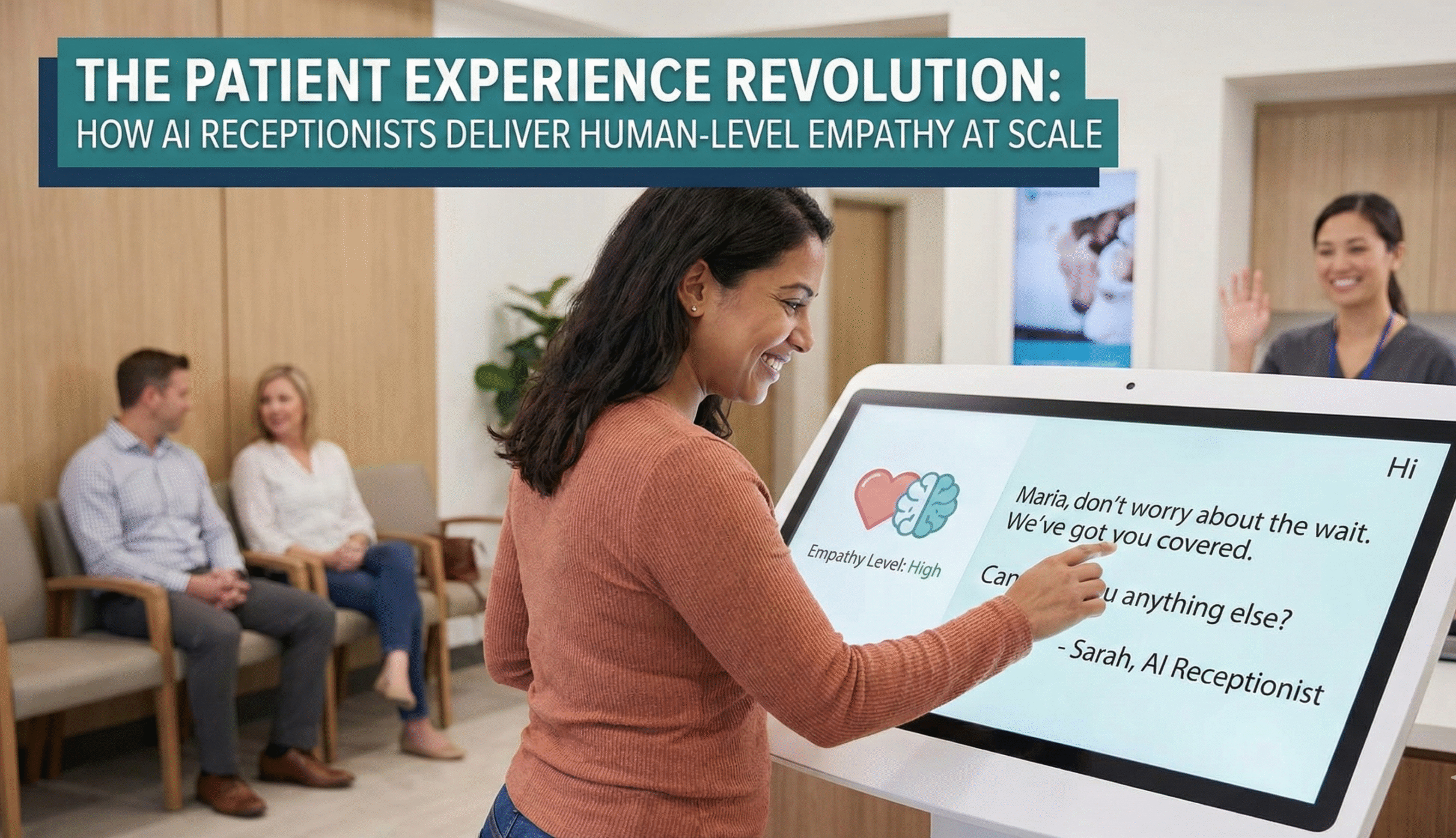
AI receptionists are trained to understand tone, context, and emotion. Using advanced natural language models, they can:
- Speak calmly and empathetically even during stressful moments.
- Listen actively by recognizing emotional triggers in a patient’s voice.
- Respond reassuringly when a patient expresses fear or concern.
- Provide clarity in simple, patient-friendly language.
- Adapt tone depending on the scenario (urgent, routine, anxious).
Therefore, patients feel cared for — even when calling in the middle of the night.
Why Patients Trust AI More Than People Expect
Many believe patients prefer humans. Surprisingly, data shows the opposite when the alternative is poor communication. Patients value:
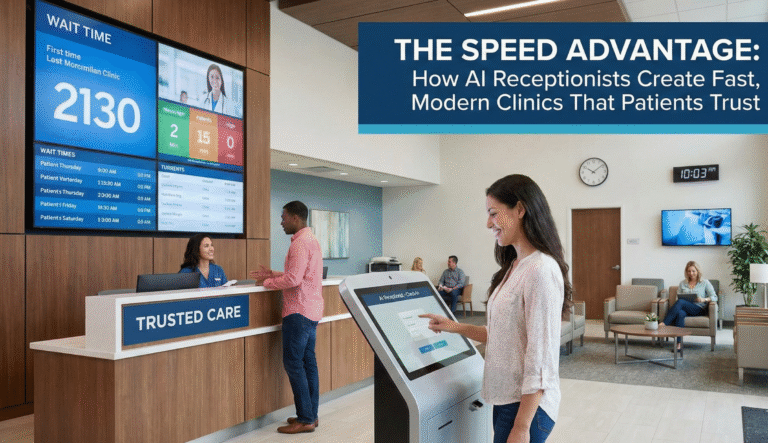
- Instant answers that don’t make them wait.
- Clear communication delivered consistently.
- No judgment, no frustration, no bad mood.
- Multilingual support that makes them feel understood.
- 24/7 availability for peace of mind.
In other words, patients trust systems that don’t fail them.
When the AI receptionist answers reliably and professionally, it actually increases patient confidence more than rushed human interactions.
The Emotional Journey of a Patient (and Where AI Helps Most)
Understanding patient emotion is key to improving experience. Let’s break down the journey:
1. Uncertainty
Before calling, patients feel uncertain or anxious.
AI receptionists reduce this by answering instantly and clearly.
2. Vulnerability
Patients may feel embarrassed, worried, or stressed.
AI responds with calm, supportive language — no pressure, no judgment.
3. Decision-making
Patients decide whether the clinic is trustworthy.
A polite, professional AI agent builds trust quickly.
4. Commitment
Booking an appointment feels safer when the process is easy.
AI handles booking without delay, making the decision smooth.
As a result, the emotional stress of seeking care becomes a positive experience.
Real-World Examples of AI Improving Patient Experience
1. The Anxious Late-Night Caller
A patient wakes up at midnight with dental pain.
Before AI: voicemail, frustration, and anxiety.
After AI: immediate support, appointment booked, reassurance delivered.
2. The Multilingual Family
A family with three languages struggles to communicate with traditional staff.
The AI receptionist switches languages instantly, improving comfort and accuracy.
3. The Busy Professional
A patient cannot call during office hours.
The AI receptionist handles calls after 9 PM, confirming appointments seamlessly.
These small moments create lifelong loyalty.
How AI Receptionists Free Humans for Real Empathy
AI isn’t replacing human warmth — it’s enabling it.
Because AI handles:
- Repetitive questions
- Scheduling
- Reminders
- Insurance information
- Follow-ups
Staff finally have time to:
- Connect with patients
- Provide actual human empathy
- Solve complex issues
- Deliver higher-quality service
Therefore, AI expands the clinic’s ability to deliver empathy instead of limiting it.
A Better Experience for Every Type of Patient
AI receptionists help clinics serve everyone more fairly and efficiently:
- New patients: Clear guidance and instant booking.
- Returning patients: Accurate reminders and personalized responses.
- Elderly patients: Slow, clear, and patient explanations.
- Expats: Multilingual support that builds trust.
- High-income clients: Fast, luxury-level service without delays.
Every patient feels prioritized — not just the one currently on the phone.
The Future of Patient Experience
The next era of healthcare focuses on “deep care” — not just clinical outcomes, but emotional comfort.
AI receptionists support this by delivering:
- Reliability
- Empathy
- Accuracy
- Personalization
- Predictability
As a result, clinics using AI build a superior reputation and retain more patients long-term.
Bottom Line
Patient experience is no longer shaped by face-to-face interactions alone.
It starts with the first call — and AI receptionists ensure that call is perfect every time.
With 24/7 availability, multilingual support, empathetic communication, and instant scheduling, AI receptionists transform the clinic-patient relationship and build trust at scale.
👉 Want to elevate your patient experience? Contact JTM Ai today and discover how AI receptionists deliver human-level empathy around the clock.