
AI Agents in Healthcare: Patient Care and Clinic Efficiency
AI Agents in Healthcare The Future of Patient Access, Engagement, and Support.
Let’s begin with a common misconception: voice AI agents ≠ chatbots.
When most people hear “AI in healthcare,” they think of chatbots. A little widget on a website that spits out canned responses. But let’s be clear: chatbots are not AI agents.
Chatbots are rule-based. They rely on yes/no choices or simple menus. At best, they pass you to a live human after wasting time. At worst, they frustrate patients and make clinics look unprofessional.
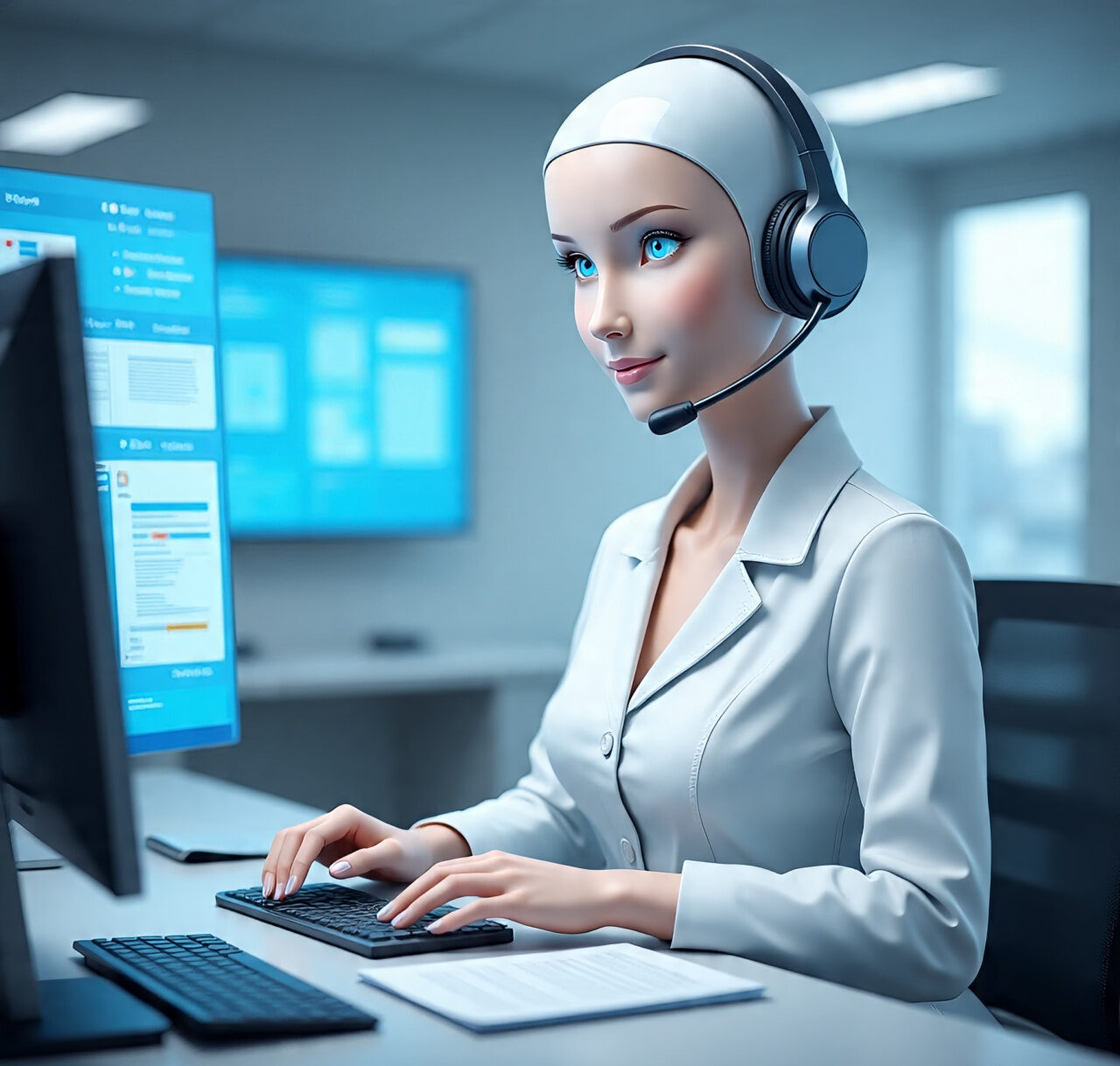
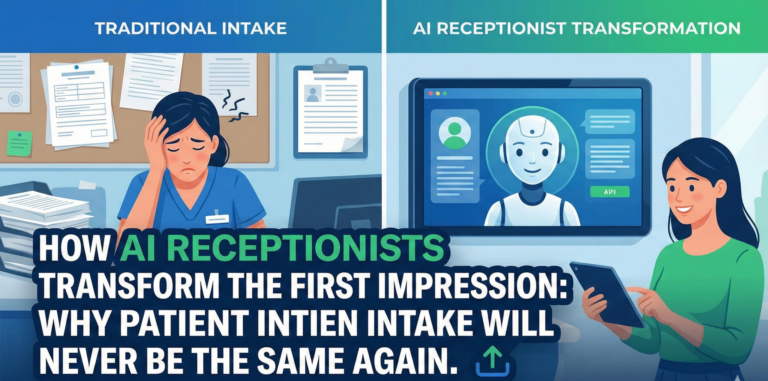
AI agents are different. They use large language models (LLMs), natural language processing, and voice AI. As a result, they can understand, respond, and act in ways that feel human. They don’t just answer questions; instead, they perform tasks, personalize interactions, and work 24/7 without fatigue.
What Are AI Agents in Healthcare?
An AI agent in healthcare acts like a virtual staff member. For example, it can:
- Talk to patients over the phone in natural, human-like conversations.
- Recognize tone, intent, and even humor.
- Remember past interactions and personalize support.
- Take action autonomously — like booking an appointment, calling an insurer, or documenting a patient assessment.
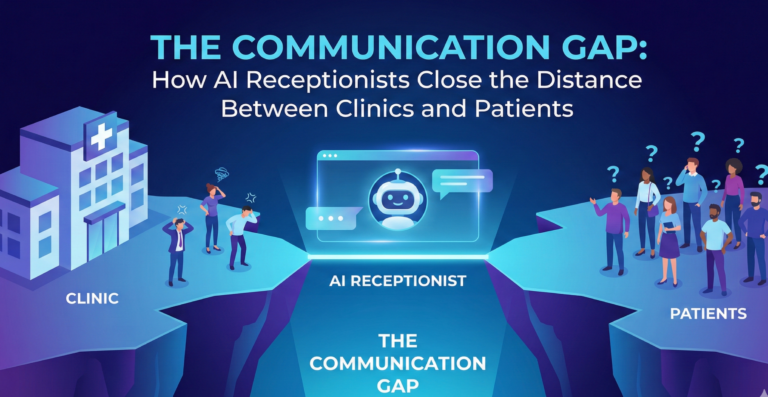
Unlike a chatbot, which reacts to limited inputs, an AI agent can proactively engage with patients and staff. As a result, conversations feel more natural and useful. That means less waiting, fewer missed calls, and a better patient experience.
Why Clinics and Health Systems Need Them
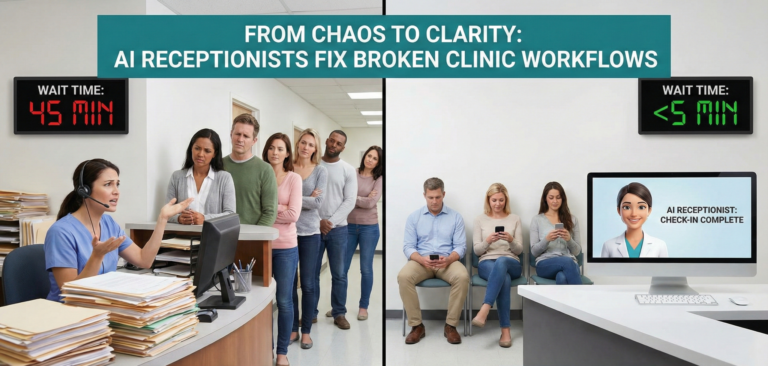
Healthcare has a staffing problem. Reception teams are overwhelmed. Nurses are stretched thin. Patients get frustrated when calls go unanswered or questions get bounced around. Therefore, clinics risk losing both revenue and trust. Every missed call is lost income. Every delay damages patient confidence.
AI agents solve this by:
- Being available 24/7. Patients don’t just call during office hours. Instead, they call at night, on weekends, and during moments of stress. AI agents never sleep.
- Scaling instantly. Whether it’s 5 calls or 50, AI agents can handle them all without putting anyone on hold.
- Cutting operational costs. One AI agent can do the work of several receptionists for a fraction of the cost.
- Reducing no-shows. Automated reminders, proactive calls, and follow-ups keep patients on schedule.
For a clinic owner or hospital administrator, this is not a “nice-to-have.” Rather, it’s about protecting revenue, boosting efficiency, and delivering better patient care.
Real-World Use Cases of Voice AI Agents
Voice AI agents already deliver measurable results. For instance, they can:
- Support medication adherence: Calling patients to remind them about prescriptions, answer questions, and encourage compliance.
- Verify insurance: Contacting payors to complete benefit checks on behalf of providers, reducing delays.
- Complete health risk assessments: Documenting patient risk profiles efficiently for payors.
- Provide after-hours support: Answering anxious calls late at night, documenting concerns, and handing off to staff.
- Schedule appointments: Handling inbound calls, booking directly into clinic calendars, and preventing double-booking.
In short, this isn’t the future — it’s happening right now.
The Key Differences Between Chatbots and AI Agents
| Feature | Chatbots | AI Agents in Healthcare |
|---|---|---|
| Interaction style | Menu-based, yes/no, limited scripts | Natural conversation, voice & text |
| Tasks performed | Basic Q&A only | Complex workflows, decision-making |
| Availability | Limited (office hours) | 24/7, always on |
| Scalability | One user at a time | Dozens of calls simultaneously |
| Action-taking | Rare (redirects to human) | Books, calls, verifies, documents |

Why Patients Value AI Agents
Patients don’t care about the technology. Instead, they care about being heard, supported, and helped immediately. AI agents deliver because they:
- Provide instant answers instead of “please hold.”
- Offer empathetic responses that feel human.
- Reduce stress by being always available, even at night.
- Ensure continuity of care by documenting interactions for staff.
As a result, patients feel supported and providers see smoother workflows.
Technology Behind the Agents
AI agents in healthcare rely on several technologies working together:
- Speech recognition converts spoken words into text.
- Natural Language Processing (NLP) interprets meaning and intent.
- Conversational AI/LLMs generate human-like responses.
- Integrations with EMRs, CRMs, and scheduling software allow real action.
Therefore, the outcome is not just conversation, but conversation that leads to results.
The Bottom Line
AI agents in healthcare are not futuristic. In fact, they are already filling schedules, cutting admin costs, and keeping patients engaged around the clock. Clinics that adopt them gain an edge. Meanwhile, those that ignore them risk falling behind.
At JTM Digital Solutions, we believe the future belongs to clinics that never miss a patient call, never leave a patient unsupported, and never waste staff hours on tasks AI can handle.
👉 Want to see how AI agents can transform your clinic? Download our free guide: The Agentic AI Workforce is Coming to Healthcare.inics that never miss a patient call, never leave a patient unsupported, and never waste staff hours on tasks that AI can handle.


One Comment